Foundations & Slabs

Service Overview
A foundation pour is the shortest job with the longest consequences. Most residential foundations run 30–50 yards - small enough that a crew can technically wheelbarrow it, and large enough that wheelbarrowing will cost a full crew-day, leave cold joints between sections, and disturb the rebar cage your engineer just signed off on.
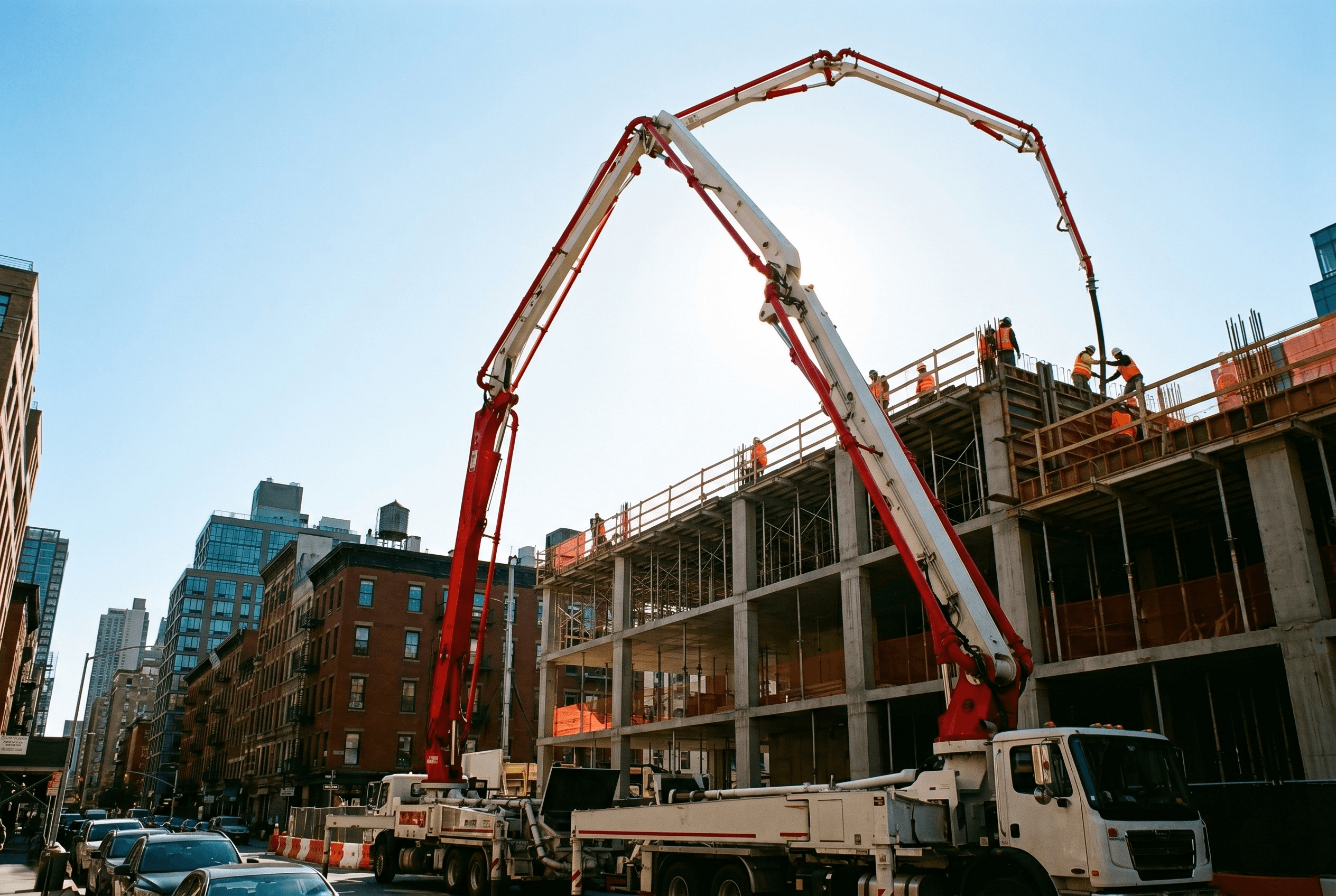
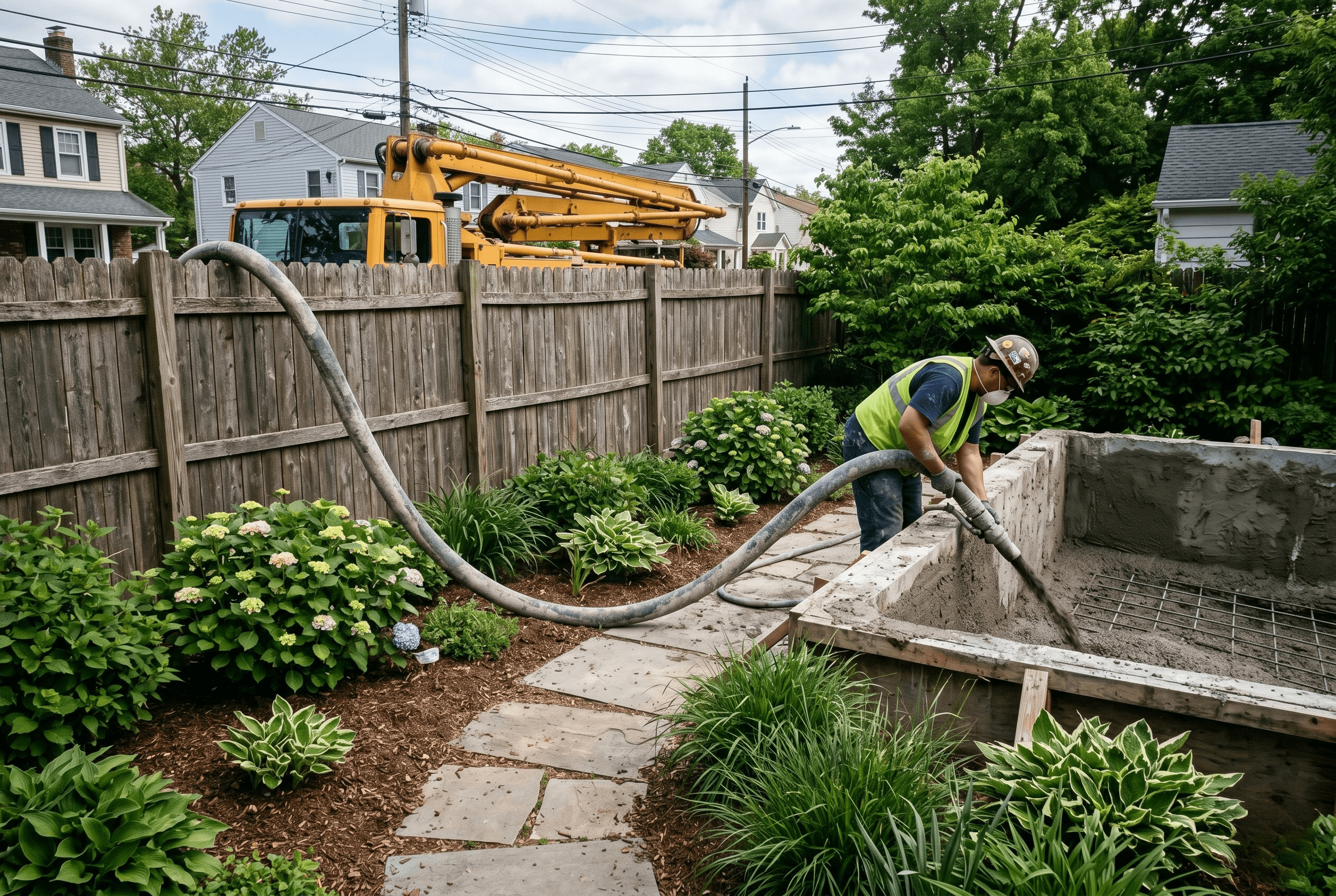
A line pump cuts that work to under an hour with two people. We snake the hose through the gate, around the house, into the trench - no ruts in the yard, no concrete placed by hand, no chasing slump. Basement walls and deep footings: the 47m boom is on call.
Why the Right Pump Matters on Foundations & Slabs
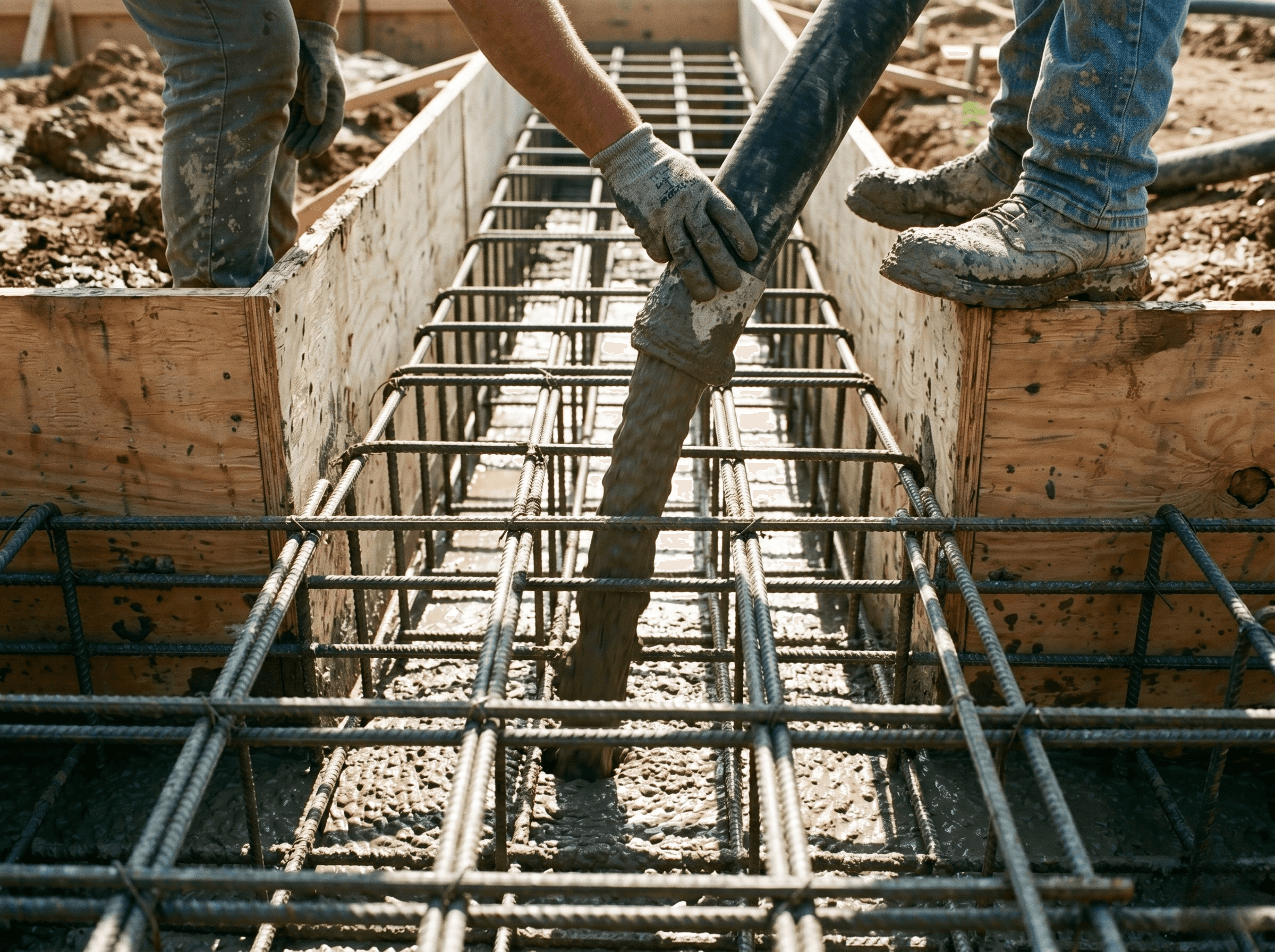
Foundations are stiff-mix, time-sensitive, and hard to reach. Place it wrong and you've baked a defect into the lowest part of the building - literally and legally.
Line pumps place 30 - 60 yd³/hour through a 3" hose; a wheelbarrow crew averages 1–2 yd³/hour per worker
Foundation mixes run at 3 - 4" slump - stiff enough to make chute-placement from the truck physically exhausting and inconsistent
Pumping reduces honeycomb voids along form walls by up to 30% compared to direct chute placement
Cold joints between segments of a continuous pour can reduce foundation strength by 15 - 25%
Line-pump hose reach extends up to 300 ft - pours over landscaping, fences, or tight urban lots with no truck access
What's Included in This Service
Every foundation or slab pour with Grayline includes: pre-pour walkthrough to identify access routes, hose-path planning around landscaping and utility lines, protection matting on finished surfaces, staged discharge so the forms stabilize before full-rate pumping, vibration coordination with your crew, and a clean line-flush before we pack out. No concrete on your driveway.